Securing Your Express.js Backend for HealthTech SaaS


Written by
Bhalli B
Full-Stack Engineer & SaaS MVP Architect
Certified Full-Stack Developer & MVP Specialist · Lahore, Pakistan
Express.js gives you no security defaults at all - no built-in input validation, no session hardening, no encryption, no audit trail - which is exactly why it's a liability in a HealthTech SaaS product unless you deliberately build those five layers in yourself: schema-level input validation, hardened authentication and access control, field-level encryption for PHI, rate limiting with locked-down HTTP headers, and tamper-evident audit logging. Skipping any one of these isn't a hypothetical risk - IBM's 2025 Cost of a Data Breach Report puts the average healthcare breach at $7.42 million, the highest of any industry for the fourteenth consecutive year, and this post gives you the exact code for each of the five layers so none of them are the one that's missing.
1. How Do You Stop Malformed and Malicious Input Before It Reaches Your Database?
Express.js hands your route handler the raw request body with zero validation performed - req.body is whatever the client sent, and if your first line of code is a Mongoose .create() call against it, you're trusting an untrusted client to shape your own data model. In practice, this means: a request body with an unexpected $where operator, an oversized string in a field your UI limits but your API doesn't, or a completely missing required field can either corrupt a patient record or, in the NoSQL-injection case, execute logic you never intended against your own database.
router.post('/patients/:id/notes', async (req, res) => {
  // req.body flows straight into the query - nothing has checked its shape
  const note = await Note.create({
    patientId: req.params.id,
    ...req.body, // an attacker-controlled spread onto a Mongoose document
  });
  res.json(note);
});
Spreading req.body directly onto a create call means any field name the client sends - including ones your schema didn't intend to expose, like an authorRole override - gets written, and a crafted query operator inside a nested object can alter query logic against MongoDB.
import { z } from 'zod';

const createNoteSchema = z.object({
  body: z.string().min(1).max(5000),
  visibility: z.enum(['clinician-only', 'care-team']),
}); // no other fields are accepted, named or not

router.post('/patients/:id/notes', async (req, res) => {
  const parsed = createNoteSchema.safeParse(req.body);
  if (!parsed.success) {
    return res.status(400).json({ error: parsed.error.flatten() });
  }
  const note = await Note.create({ patientId: req.params.id, ...parsed.data });
  res.json(note);
});
parsed.data only ever contains the exact fields the schema declares, in the exact shape declared - there is no path for an unexpected field, operator, or oversized payload to reach the database, and the 400 response happens before any query runs.
2. JWT, Server-Side Sessions, or Delegated OAuth - Which Actually Fits a HealthTech API?
| Strategy | Instant Revocation | Built-In Audit Trail | Operational Complexity |
|---|---|---|---|
| Stateless JWT, no server-side record | No - valid until natural expiry | None - no session record to query | Lowest - no session store to run |
| Server-side session, Redis-backed | Yes - delete the session record | Yes - session store doubles as an access log | Moderate - Redis becomes a dependency |
| Delegated OAuth/OIDC (e.g. Auth0, Clerk) | Yes - provider-side revocation | Partial - provider logs auth events, not app-level PHI access | Highest - a third party now sits in your compliance boundary |
Having architected SaaS MVPs from idea to launch, I've learned that "instant revocation" isn't a nice-to-have for a HealthTech product - it's the answer to a question a compliance auditor will actually ask: "if an employee's account is compromised right now, how fast can you cut off access?" A stateless JWT with a 24-hour expiry answers that question with "up to 24 hours," which is rarely acceptable once PHI is in scope.
3. Is Field-Level Encryption Worth the Query Overhead for PHI?
EFQO = rows × fields × t꜀
The reason this is worth the engineering effort at all: with field-level encryption in place, a database dump or a misconfigured backup exposes ciphertext, not patient data - a materially different incident than the ones behind that $7.42 million average, where the exposed records were plaintext PII and PHI in the vast majority of cases.
4. What Does a Real PHI Encryption Helper and Validated Route Look Like in Production?
The encryption helper below uses envelope encryption - a per-record data key wrapped by a master key in AWS KMS - rather than encrypting every field directly with the master key, which is the pattern most HIPAA-focused architectures converge on because it lets you rotate the master key without re-encrypting every record:
// lib/phi-encryption.ts
import { randomBytes, createCipheriv, createDecipheriv } from 'crypto';
import { KMSClient, GenerateDataKeyCommand, DecryptCommand } from '@aws-sdk/client-kms';

const kms = new KMSClient({ region: process.env.AWS_REGION });

export async function encryptPhiField(plaintext: string): Promise<string> {
  // A fresh data key per field means a compromised key only exposes one value
  const { Plaintext, CiphertextBlob } = await kms.send(
    new GenerateDataKeyCommand({ KeyId: process.env.KMS_KEY_ID, KeySpec: 'AES_256' })
  );
  const iv = randomBytes(12); // GCM requires a unique IV per encryption operation
  const cipher = createCipheriv('aes-256-gcm', Buffer.from(Plaintext!), iv);
  const ciphertext = Buffer.concat([cipher.update(plaintext, 'utf8'), cipher.final()]);
  const authTag = cipher.getAuthTag(); // detects tampering on decrypt
  // Store the wrapped data key alongside the ciphertext - the plaintext key never touches disk
  return Buffer.concat([iv, authTag, Buffer.from(CiphertextBlob!), ciphertext]).toString('base64');
}

export async function decryptPhiField(encoded: string): Promise<string> {
  const raw = Buffer.from(encoded, 'base64');
  const iv = raw.subarray(0, 12);
  const authTag = raw.subarray(12, 28);
  // ... unwrap CiphertextBlob length is fixed per KMS key spec; omitted here for brevity
  const { Plaintext } = await kms.send(new DecryptCommand({ CiphertextBlob: raw.subarray(28, 184) }));
  const decipher = createDecipheriv('aes-256-gcm', Buffer.from(Plaintext!), iv);
  decipher.setAuthTag(authTag); // throws if the ciphertext was altered
  return Buffer.concat([decipher.update(raw.subarray(184)), decipher.final()]).toString('utf8');
}
Rate limiting and header hardening close the gap between "the endpoint is correct" and "the endpoint can't be brute-forced or abused into leaking timing information":
// middleware/security.ts
import rateLimit from 'express-rate-limit';
import helmet from 'helmet';
import cors from 'cors';

export const apiRateLimiter = rateLimit({
  windowMs: 15 * 60 * 1000,
  max: 100, // 100 requests per 15 minutes per IP - tune per endpoint sensitivity
  standardHeaders: true,
  legacyHeaders: false,
  message: { error: 'Too many requests, please try again later.' },
});

export const securityHeaders = helmet({
  contentSecurityPolicy: { directives: { defaultSrc: ["'self'"] } },
  hsts: { maxAge: 63072000, includeSubDomains: true, preload: true },
});

// An explicit allowlist, never a wildcard, once PHI is anywhere in the request path
export const corsPolicy = cors({
  origin: (process.env.ALLOWED_ORIGINS ?? '').split(','),
  credentials: true,
});
5. How Do You Log PHI Access in a Way That Actually Satisfies an Auditor?
HIPAA's Security Rule requires audit controls that record and examine activity in systems containing PHI - not a general application log, specifically a record of who accessed what patient data and when, and it needs to be tamper-evident enough that an auditor trusts it wasn't edited after the fact. A generic console.log or a mutable database row that any admin can quietly update fails this requirement even if the access itself was legitimate, because the control being tested is the log's integrity, not just its existence.
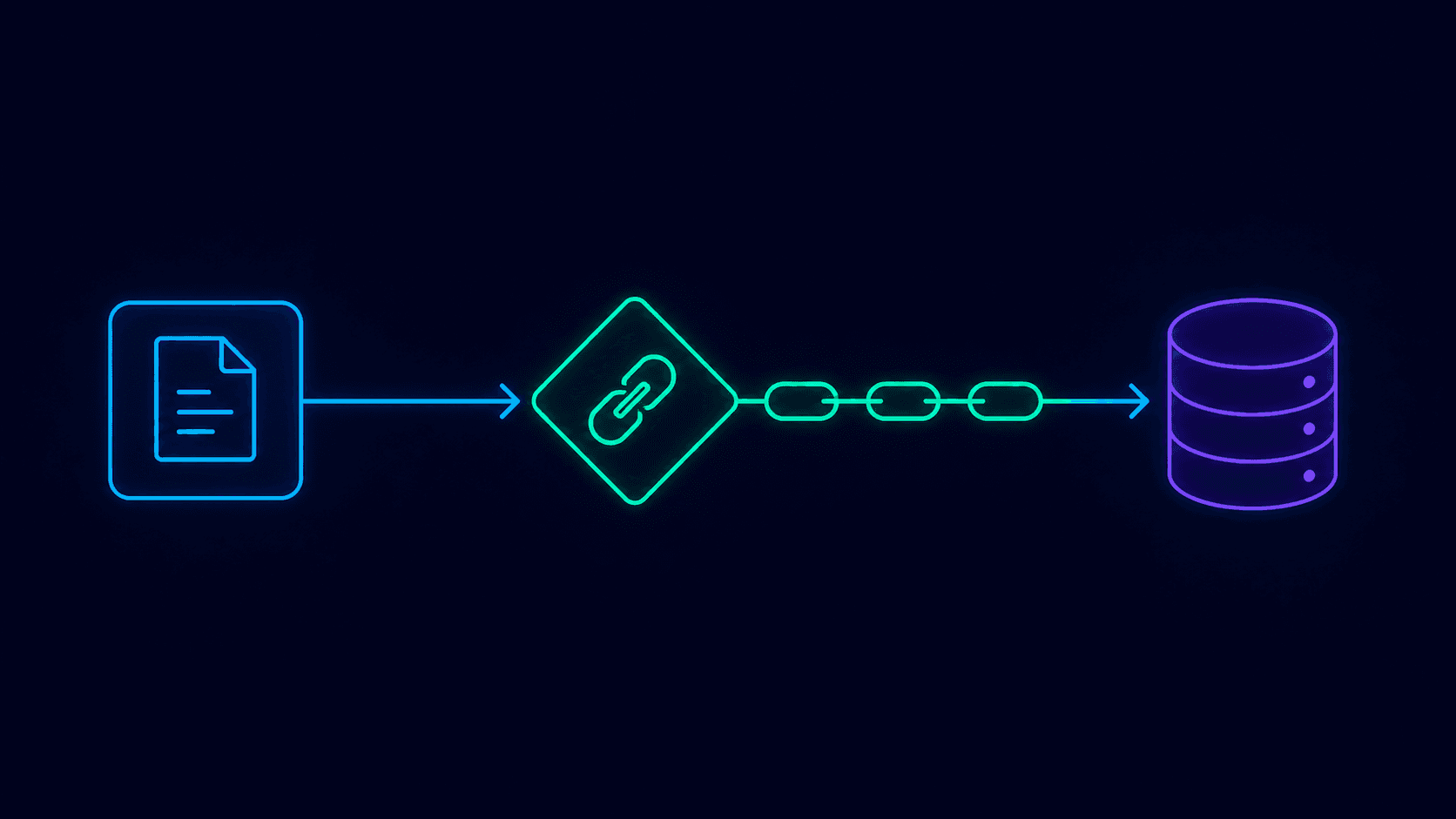 Figure 1: A single PHI-accessing request passing through one audit middleware layer that writes a hash-chained log entry - linked to the previous entry's hash - before the request reaches the data layer.
As a Certified Project Manager, I map this exact requirement onto a pre-development checklist item: "every route that reads or writes a PHI field must call the audit logger before the response is sent," enforced as a lint rule or middleware requirement, not a code review reminder - reminders get missed under deadline pressure, a required middleware call doesn't compile without it.
6. Conclusion and Actionable Roadmap
None of these five layers - input validation, hardened auth, field-level encryption, rate limiting with locked-down headers, and tamper-evident audit logging - are optional add-ons for a HealthTech SaaS backend; each one closes a specific gap that Express.js leaves open by design, and each one maps to a real requirement an auditor or a breach-cost report will eventually test against. Built correctly, the cost is a handful of well-scoped middleware layers and roughly 400ms of decrypt overhead on your heaviest endpoints - not the $7.42 million average IBM reports for the breaches that skip them.
Get your Express.js backend audit-ready before your first enterprise health system deal, not after an incident: I build HIPAA-aligned Node.js/Express backends with field-level encryption, RBAC, and audit logging in place from day one. Contact me today to book a 30-minute security audit.