MCP vs A2A: Which Protocol Should You Build On?

Written by
Bhalli B
Full-Stack Engineer & SaaS MVP Architect
Certified Full-Stack Developer & MVP Specialist · Lahore, Pakistan
MCP and A2A aren't competing standards you have to choose between - they operate at different layers of the agent stack, and most production multi-agent systems in 2026 end up running both simultaneously rather than picking one. Model Context Protocol (MCP), released by Anthropic in November 2024, standardizes how a single agent accesses external tools and data sources - the vertical connection. Agent2Agent (A2A), released by Google in April 2025 with backing from 50+ enterprise partners, standardizes how independent agents discover each other's capabilities and delegate tasks - the horizontal connection. Since December 2025, both protocols have been governed by the Agentic AI Foundation under the Linux Foundation, with Anthropic, Google, OpenAI, Microsoft, AWS, and Block as co-founding members, which settles the "who controls this" governance question that used to be the real blocker to enterprise adoption. This post breaks down exactly where each protocol's responsibility ends, shows you the integration-complexity math that explains why standardizing on both beats bespoke point-to-point connectors, and gives you working TypeScript for wiring an agent that uses MCP for tool access and A2A for task delegation in the same request path.
1. What's the Actual Difference Between MCP and A2A?
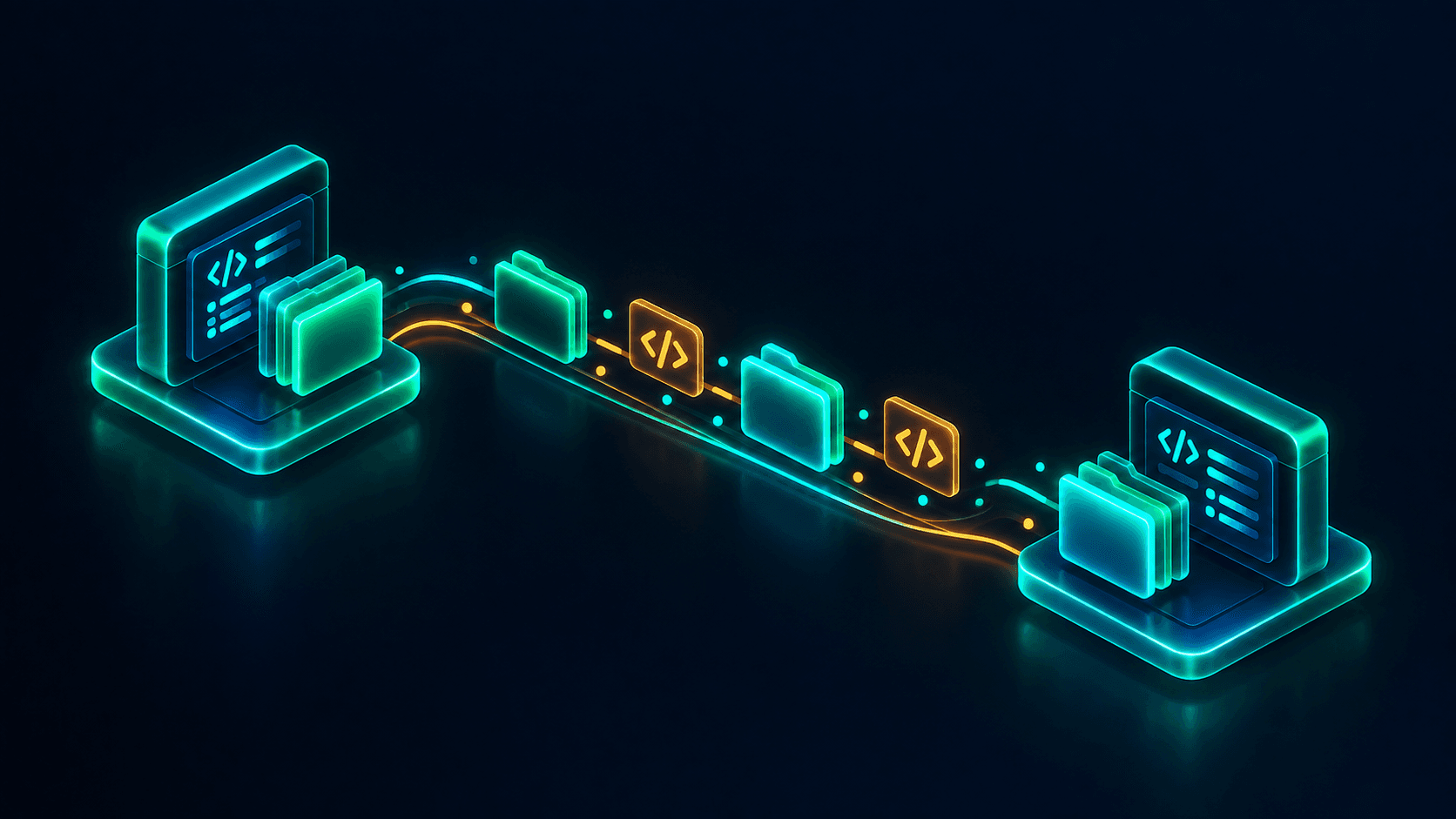
MCP solves single-agent tool access: an agent needs to query a database, call an API, or read a file, and MCP gives it a standardized, schema-based interface to discover and invoke that capability without a bespoke integration for every tool. A2A solves a different problem entirely - task delegation between independent agents that may run on different vendors, frameworks, or infrastructure. An A2A-compliant agent publishes a JSON-based Agent Card describing its capabilities, and other agents use that card to identify the right partner for a given task, then hand off work through a defined task lifecycle that supports both instant responses and long-running, asynchronous processes.
The Layer Test: Is This a Tool Call or a Handoff?
The fastest way to decide which protocol a given interaction needs: if your agent is reaching into a system it doesn't own (a database, an API, a file store), that's MCP. If your agent is asking a different agent - one with its own reasoning, its own state, potentially built by a different team or vendor - to go do something and report back, that's A2A. An agent checking a CRM through an MCP server is a tool call. An agent asking a separate scheduling agent to negotiate a meeting time across three people's calendars is a delegation, and A2A's Agent Card and task lifecycle exist specifically for that handoff.
2. Do You Actually Need Both, or Just One?
Most teams overthink this decision. If your system is a single agent orchestrating tool calls - the dominant pattern for internal automation and most SaaS AI features - you need MCP and nothing else. A2A only earns its complexity when you have genuinely independent agents that need to discover and delegate to each other across a trust or vendor boundary you don't fully control. As a Certified Project Manager, I run every client through a two-question filter before adding a second interoperability standard to a system: is this protocol governed by a foundation with more than one company at the table (both MCP and A2A now pass this test under the AAIF), and does the agent you're integrating with actually live outside your own orchestration layer? If the answer to the second question is no - if it's just another function in your own codebase - you don't need A2A's Agent Card overhead; you need a function call, or at most an internal MCP tool.
There's also a lesser-known third option worth naming so you don't confuse it with either: ACP, created by IBM, focuses on agent communication within a single runtime environment - closer to an internal message bus than an inter-organizational protocol. It's seen far less adoption than MCP or A2A and solves a narrower problem; most teams evaluating standards in 2026 don't need it.
3. MCP vs A2A vs ACP: How Do the Three Protocols Actually Compare?
| Dimension | MCP | A2A | ACP |
|---|---|---|---|
| Solves | Agent-to-tool/data access | Agent-to-agent task delegation | Intra-runtime agent messaging |
| Originator | Anthropic (Nov 2024) | Google (Apr 2025) | IBM |
| Governance | Agentic AI Foundation (Linux Foundation) | Agentic AI Foundation (Linux Foundation) | Single-vendor (IBM) |
| Discovery mechanism | Tool/resource schema per server | JSON Agent Card per agent | Runtime-local registration |
| Ecosystem adoption (as of Aug 2026) | Broad, default for tool access | 190+ AAIF member orgs, growing fast | Narrow, single-runtime use cases |
Both MCP and A2A also have payment extensions worth knowing about if your agents transact: Google's Agent Payments Protocol (AP2) extends A2A for agent-to-agent transactions, while x402 (Coinbase) pairs with MCP-style tool access for machine-to-machine micropayments - I go deeper on the payment-specific side of that stack in AgentCore Payments vs Binance Agent OS for Builders.
4. What's the Complexity Cost of Running Both Protocols in Production?
The argument for standardizing on MCP and A2A instead of bespoke point-to-point integrations isn't aesthetic - it's a direct reduction in the number of integration paths your team has to build and maintain.
P_bespoke = n(n−1), P_standard = n
A custom REST wrapper written for every new tool or partner agent, with its own auth pattern, its own retry logic, its own schema.
I've inherited a client's agent system with fourteen hand-rolled connectors, no two written the same way - every new integration meant re-solving auth and error handling from scratch.
One MCP client library handles every tool server; one A2A client handles every partner agent's Agent Card and task lifecycle, regardless of who built it.
A new tool or partner agent is a config addition, not a new codebase to write and maintain.
5. How Do You Actually Wire MCP and A2A Into the Same Agent?
Here's an agent that uses MCP to pull data from a governed tool server, then uses A2A to delegate a sub-task to a specialized partner agent when the work falls outside its own scope - the pattern most production multi-agent systems actually run:
// mcp-tool-access.ts
// Standard MCP client flow: discover available tools from a server,
// then invoke one with validated arguments. No bespoke per-tool code.
import { Client } from "@modelcontextprotocol/sdk/client";
import { StdioClientTransport } from "@modelcontextprotocol/sdk/client/stdio";

export async function queryInventoryTool(sku: string): Promise<unknown> {
  const client = new Client({ name: "inventory-agent", version: "1.0.0" });
  const transport = new StdioClientTransport({
    command: "npx",
    args: ["-y", "@company/inventory-mcp-server"],
  });

  await client.connect(transport);

  try {
    // Tools are discovered at runtime, not hardcoded - the server
    // can add or version tools without breaking this client.
    const { tools } = await client.listTools();
    const inventoryTool = tools.find((t) => t.name === "get_stock_level");

    if (!inventoryTool) {
      throw new Error("Required MCP tool 'get_stock_level' not available on server");
    }

    return await client.callTool({
      name: inventoryTool.name,
      arguments: { sku },
    });
  } finally {
    await client.close();
  }
}
And the A2A side - delegating to a partner agent discovered via its Agent Card, rather than a hardcoded endpoint:
// a2a-delegation.ts
// Discovers a partner agent's capabilities via its Agent Card, then
// delegates a task and polls the A2A task lifecycle until completion.
interface AgentCard {
  agentId: string;
  capabilities: string[];
  taskEndpoint: string;
}

async function discoverAgent(agentCardUrl: string): Promise<AgentCard> {
  const res = await fetch(agentCardUrl);
  if (!res.ok) {
    throw new Error(`Agent Card fetch failed: ${res.status} ${res.statusText}`);
  }
  return res.json();
}

export async function delegateSchedulingTask(
  agentCardUrl: string,
  taskPayload: { participants: string[]; durationMinutes: number }
): Promise<{ status: string; result?: unknown }> {
  const card = await discoverAgent(agentCardUrl);

  if (!card.capabilities.includes("calendar_negotiation")) {
    // Fail before delegating - don't hand off work to an agent that
    // never advertised the capability you actually need.
    throw new Error(`Agent ${card.agentId} does not support calendar_negotiation`);
  }

  const taskRes = await fetch(card.taskEndpoint, {
    method: "POST",
    headers: { "Content-Type": "application/json" },
    body: JSON.stringify({ type: "calendar_negotiation", payload: taskPayload }),
  });
  const { taskId } = await taskRes.json();

  // A2A tasks are lifecycle-based - long-running negotiations need
  // polling (or a webhook callback) rather than a blocking response.
  let status = "pending";
  let result: unknown;
  const maxPolls = 10;

  for (let i = 0; i < maxPolls && status !== "completed" && status !== "failed"; i++) {
    await new Promise((r) => setTimeout(r, 2000));
    const poll = await fetch(`${card.taskEndpoint}/${taskId}`);
    ({ status, result } = await poll.json());
  }

  return { status, result };
}
The gotcha we hit wiring this pattern for a client: the first version re-fetched the Agent Card on every single delegation call, adding a redundant round trip to every task - caching the card with a short TTL cut that overhead out entirely once we noticed it in APM traces. For the orchestration layer that typically sits above both of these calls, see Orchestrating AI Agents for Fintech Workflows.
6. Conclusion and Actionable Roadmap
MCP and A2A aren't a fork in the road - they're two layers of the same stack, and the "which one should I build on" framing mostly disappears once you separate "does my agent need a tool" from "does my agent need to hand work to another agent." Standardizing on both instead of bespoke connectors turns an O(n²) integration problem into an O(n) one, and with both protocols now under neutral Linux Foundation governance as of the AAIF's formation in December 2025, the vendor-lock-in objection that used to justify writing custom connectors no longer holds up.
Build your agent stack on protocols that won't get orphaned by a single vendor: I architect MCP tool servers and A2A-compliant agent coordination for production multi-agent systems on Next.js, TypeScript, and Node - the exact stack in the code above. Contact me today to book a 30-minute agent interoperability architecture audit.