Muse Glimmer Local AI: Integrating It Into a SaaS MVP

Written by
Bhalli B
Full-Stack Engineer & SaaS MVP Architect
Certified Full-Stack Developer & MVP Specialist · Lahore, Pakistan
Muse Glimmer, the 30-billion-parameter open-weight agentic model Meta Superintelligence Labs released under Apache 2.0 in August 2026, changes the build-vs-buy math for any SaaS MVP that needs AI features but can't absorb per-token cloud costs at scale - it runs entirely on a single consumer GPU (24-32GB VRAM), handles tool calling, multi-step reasoning, and multimodal input natively, and ships with a speculative-decoding drafter that gets it to real-time conversational speed on hardware you can buy off the shelf today. If you're weighing a local model against GPT-5 or Claude API calls for a feature like an in-app support agent, a document-triage bot, or an offline-capable mobile companion, this post walks through the actual architecture, the cost equation, and working deployment code so you can make that call with numbers instead of vibes.
1. What Is Muse Glimmer, and Why Should a SaaS MVP Care?
Muse Glimmer is a dense causal transformer with a dedicated ~1.8B-parameter ViT-G/14 perception encoder bolted on, distilled from Meta's larger Muse Spark model via logit distillation, then mid-trained on long-context agentic data and post-trained with a mix of supervised fine-tuning, on-policy distillation, and reinforcement learning. In practice, that pipeline is what separates it from a generic small open-weight model: it was built specifically for tool use, multi-turn task execution, and failure recovery - not just chat.
For an MVP architect, three specs matter more than the benchmark table:
- Context length: 131,072+ tokens - enough to hold an entire support ticket thread, a codebase slice, or a multi-page PDF in a single pass without RAG chunking gymnastics.
- Footprint: under 20GB at 4-bit quantization - fits comfortably in a 24GB consumer GPU alongside its KV cache, vision encoder, and drafter model.
- License: Apache 2.0 - no usage restrictions on commercial deployment, unlike some "open" model licenses that gate revenue thresholds.
As a Certified Project Manager, the question I ask before any AI feature gets scoped into a sprint isn't "can it do the task" - it's "what does failure cost us in production." Muse Glimmer's failure-recovery training (it's explicitly trained to diagnose a failed tool call and retry rather than halt the workflow) is the difference between an agent feature that needs a human-in-the-loop babysitter and one you can actually ship unattended for low-stakes tasks.
2. Local LLM vs. Cloud API: What's the Real Cost Crossover Point?
The honest answer is that local inference has a fixed cost (hardware) and cloud inference has a variable cost (tokens), so the decision comes down to your expected volume, not a blanket "local is cheaper" claim.
V = H / (C_cloud - C_local)
Worked example: a 24GB GPU-equipped server (say a rented RTX 4090 instance at roughly $350/month, or a one-time $1,600 card amortized over 18 months at ~$90/month) versus a mid-tier hosted API charging roughly $0.006 per average agentic request (a few thousand input/output tokens blended).
That crossover point moves with your actual token counts and the API provider's pricing tier, but the shape of the curve doesn't: local inference is a bet on volume, and Muse Glimmer's Apache 2.0 license means you're not paying a per-seat or revenue-share tax on top of the hardware once you're past that line.
3. How Do You Deploy Muse Glimmer Inside a Next.js SaaS Backend?
The cleanest production path right now is serving the quantized weights through llama.cpp's server mode and calling it from your Node backend exactly like you'd call any OpenAI-compatible endpoint - Muse Glimmer's llama.cpp integration exposes an OpenAI-shaped /v1/chat/completions route, so you don't need a bespoke client.
// lib/muse-glimmer-client.ts
// Wraps the local llama.cpp server so the rest of the app can treat it
// exactly like a hosted LLM provider - same call shape as OpenAI/Claude SDKs.

import { z } from 'zod';

const MUSE_ENDPOINT = process.env.MUSE_GLIMMER_URL ?? 'http://127.0.0.1:8080/v1/chat/completions';

// Reasoning strength is a Muse Glimmer-specific control - set it via the
// system prompt per the model card's documented convention, not a param.
type ReasoningStrength = 'low' | 'medium' | 'high' | 'xhigh';

interface AgentTurnInput {
  systemPrompt: string;
  userMessage: string;
  tools?: Record<string, unknown>[]; // JSON schema tool defs
  reasoning?: ReasoningStrength;
}

const ChatResponseSchema = z.object({
  choices: z.array(
    z.object({
      message: z.object({
        content: z.string().nullable(),
        tool_calls: z.array(z.any()).optional(),
      }),
      finish_reason: z.string(),
    })
  ),
});

export async function callMuseGlimmer({
  systemPrompt,
  userMessage,
  tools,
  reasoning = 'high', // 'high' is Meta's documented recommendation for agentic tasks
}: AgentTurnInput) {
  const composedSystemPrompt = `${systemPrompt}\nReasoning strength: ${reasoning}`;

  const res = await fetch(MUSE_ENDPOINT, {
    method: 'POST',
    headers: { 'Content-Type': 'application/json' },
    body: JSON.stringify({
      model: 'muse-glimmer-30b-kquant17',
      messages: [
        { role: 'system', content: composedSystemPrompt },
        { role: 'user', content: userMessage },
      ],
      tools,
      temperature: 1.0, // per model card sampling recommendation
      top_p: 0.95,
      top_k: 64,
    }),
  });

  if (!res.ok) {
    // A GPU-resident server can return 503 under load - this is where
    // failure recovery matters: don't silently swallow it upstream.
    throw new Error(`Muse Glimmer inference failed: ${res.status} ${await res.text()}`);
  }

  const parsed = ChatResponseSchema.parse(await res.json());
  return parsed.choices[0];
}
Tool-call handling is where most local-agent integrations fall apart, because a dropped or malformed tool call needs to be retried against the model's own failure-recovery training rather than bailed out to the user.
// lib/agent-tool-loop.ts
// A minimal multi-turn tool-execution loop. This is the part teams skip
// in a demo and then regret in production - the model can, and will,
// occasionally emit a tool call your handler doesn't recognize.

import { callMuseGlimmer } from './muse-glimmer-client';

interface ToolHandler {
  (args: Record<string, unknown>): Promise<unknown>;
}

const toolRegistry: Record<string, ToolHandler> = {
  lookup_invoice: async (args) => db.invoice.findUnique({ where: { id: args.invoiceId as string } }),
  send_email: async (args) => mailer.send(args as any),
};

export async function runAgentTask(userMessage: string, maxTurns = 6) {
  let turn = 0;
  let lastMessage = userMessage;

  while (turn < maxTurns) {
    const result = await callMuseGlimmer({
      systemPrompt: 'You are a billing support agent. Use tools when you need real data.',
      userMessage: lastMessage,
      tools: Object.keys(toolRegistry).map((name) => ({ type: 'function', function: { name } })),
    });

    const toolCall = result.message.tool_calls?.[0];
    if (!toolCall) return result.message.content; // model gave a final answer

    const handler = toolRegistry[toolCall.function.name];
    if (!handler) {
      // Unknown tool name - feed the error back rather than crashing the
      // request. Muse Glimmer was explicitly RL-trained to recover from this.
      lastMessage = `Tool "${toolCall.function.name}" does not exist. Available tools: ${Object.keys(toolRegistry).join(', ')}`;
      turn++;
      continue;
    }

    const toolResult = await handler(JSON.parse(toolCall.function.arguments));
    lastMessage = `Tool result: ${JSON.stringify(toolResult)}`;
    turn++;
  }

  throw new Error('Agent exceeded max turns without resolution');
}
4. Muse Glimmer vs. Gemma4-31B vs. Qwen3.6-27B: Which Should You Actually Ship?
All three are viable open-weight options in the ~27-31B class as of mid-2026, but they win on different axes, and the right pick depends on whether your MVP's bottleneck is agentic reliability, raw reasoning, or multimodal document work.
| Benchmark | Muse Glimmer-30B | Gemma4-31B | Qwen3.6-27B |
|---|---|---|---|
| MCP Atlas (tool use) | 75.5 | 54.2 | 62.5 |
| SWE-Bench Verified | 76.0 | 66.6 | 77.2 |
| OSWorld-Verified (GUI agents) | 65.9 | 58.5 | 75.6 |
| OmniDocBench v1.5 (docs) | 75.8 | 72.5 | 77.8 |
| Siren AgentDojo attack success (↓ better) | 28.4 | 25.6 | 40.3 |
The pattern that matters for an MVP: Muse Glimmer's biggest lead over both competitors is on MCP Atlas - a benchmark for tool-calling reliability inside orchestration scaffolds - while Qwen3.6-27B pulls ahead on raw coding (SWE-Bench) and GUI agent tasks (OSWorld). If your MVP's AI feature is "call our internal APIs correctly, every time," Muse Glimmer's training objective matches your use case more directly than a model optimized primarily for coding benchmarks.
5. Where Local Agents Actually Break: Tool-Call Recovery in Production
const toolCall = result.message.tool_calls?.[0];
const data = await toolRegistry[toolCall.function.name](args);
return data; // throws TypeError if the tool name doesn't exist
An unrecognized tool name crashes the request handler and the user sees a 500 - this is the single most common cause of "the demo worked but production kept failing" reports we see from teams shipping their first agent feature.
const handler = toolRegistry[toolCall.function.name];
if (!handler) {
  lastMessage = `Tool "${toolCall.function.name}" not found.`;
  continue; // let the model self-correct on the next turn
}
Muse Glimmer's post-training explicitly rewards diagnosing a failed call and retrying - capped at a small maxTurns bound, this pattern resolves the majority of malformed calls without a human in the loop.
As a Certified Project Manager, this is the checklist item I put in every AI-feature sprint's definition of done: a maxTurns cap, a logged fallback path to a human queue, and a cost/latency alert if the agent loop runs past three turns on more than 5% of requests. Skipping this isn't a technical shortcut - it's an unbounded liability disguised as a demo.
6. A Hybrid Local + Cloud Routing Architecture
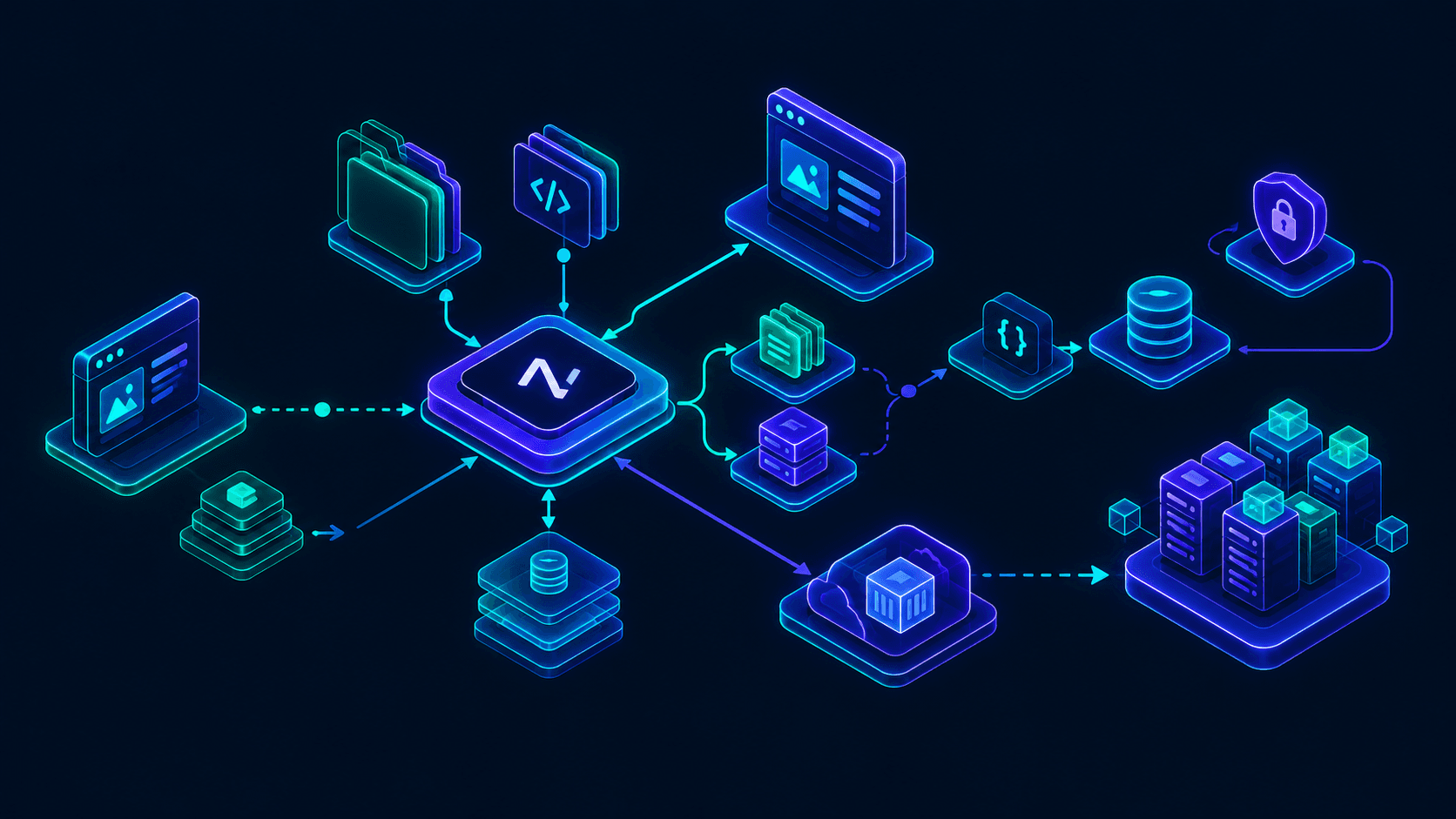
For most MVPs, the pragmatic answer isn't "local only" or "cloud only" - it's routing low-stakes, high-volume tasks to the local Muse Glimmer instance and escalating ambiguous or high-stakes turns to a larger cloud model.
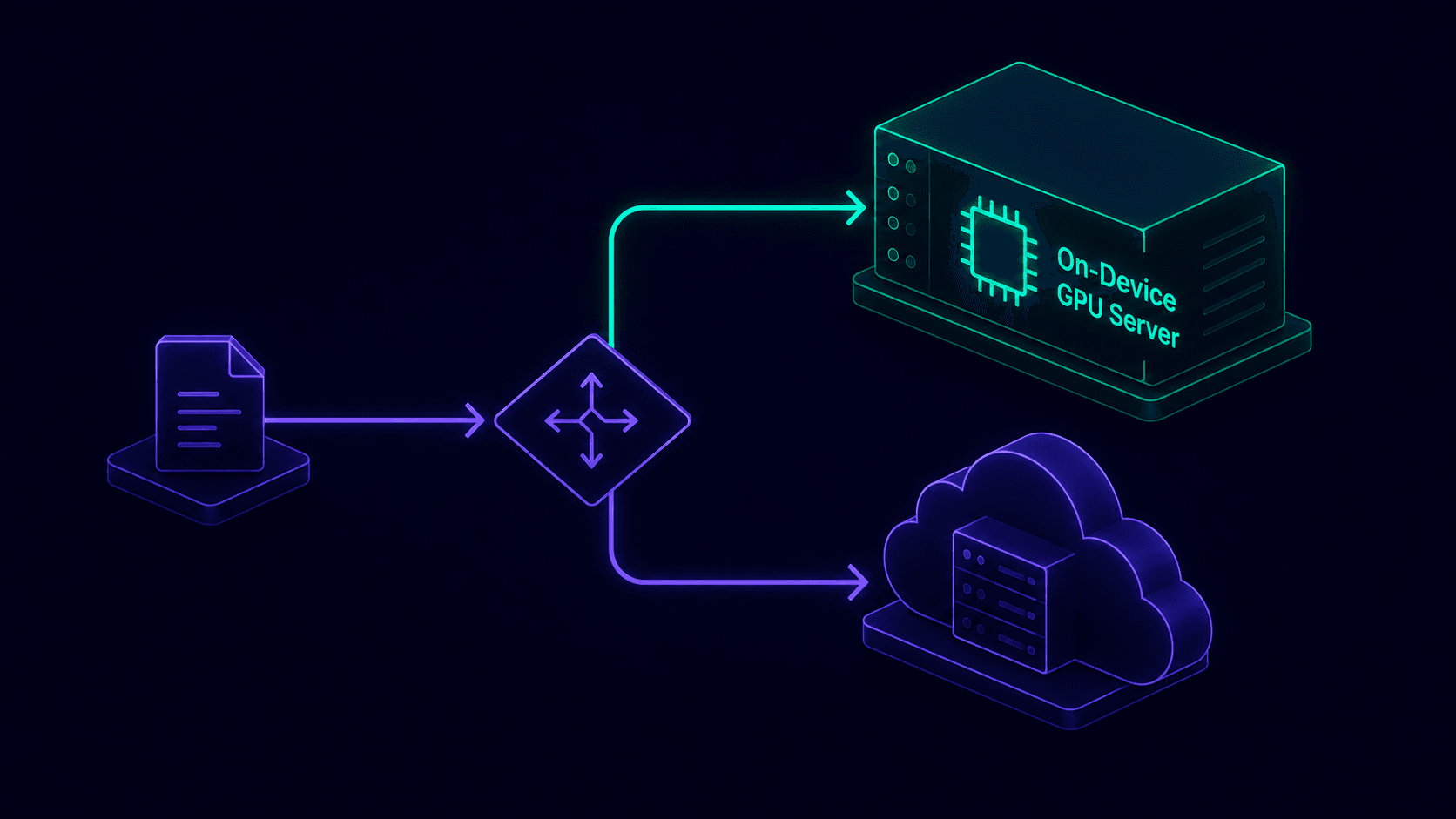 Figure 1: A request router evaluates task confidence and stakes before sending the turn to the local Muse Glimmer server or escalating to a cloud API.
7. Conclusion and Actionable Roadmap
Muse Glimmer doesn't replace a frontier cloud model for every SaaS AI feature, but it closes the gap for the category that matters most to an MVP's burn rate: high-volume, tool-bound, privacy-sensitive tasks where a 30B open-weight model with strong MCP Atlas scores and a sub-20GB footprint is genuinely good enough. The break-even math from Section 2 isn't theoretical - it's the same spreadsheet I run for clients before we commit a sprint to either path, and it routinely tips toward local once monthly agentic request volume clears the five-figure range.
Ship the right architecture the first time: I build SaaS MVPs end-to-end on Next.js, Node, and MongoDB, including hybrid local/cloud AI routing like the pattern above when the cost math supports it. Contact me today to book a 30-minute AI architecture audit.