Space-Based AI Data Centers: Google Project Suncatcher

Written by
Bhalli B
Full-Stack Engineer & SaaS MVP Architect
Certified Full-Stack Developer & MVP Specialist · Lahore, Pakistan
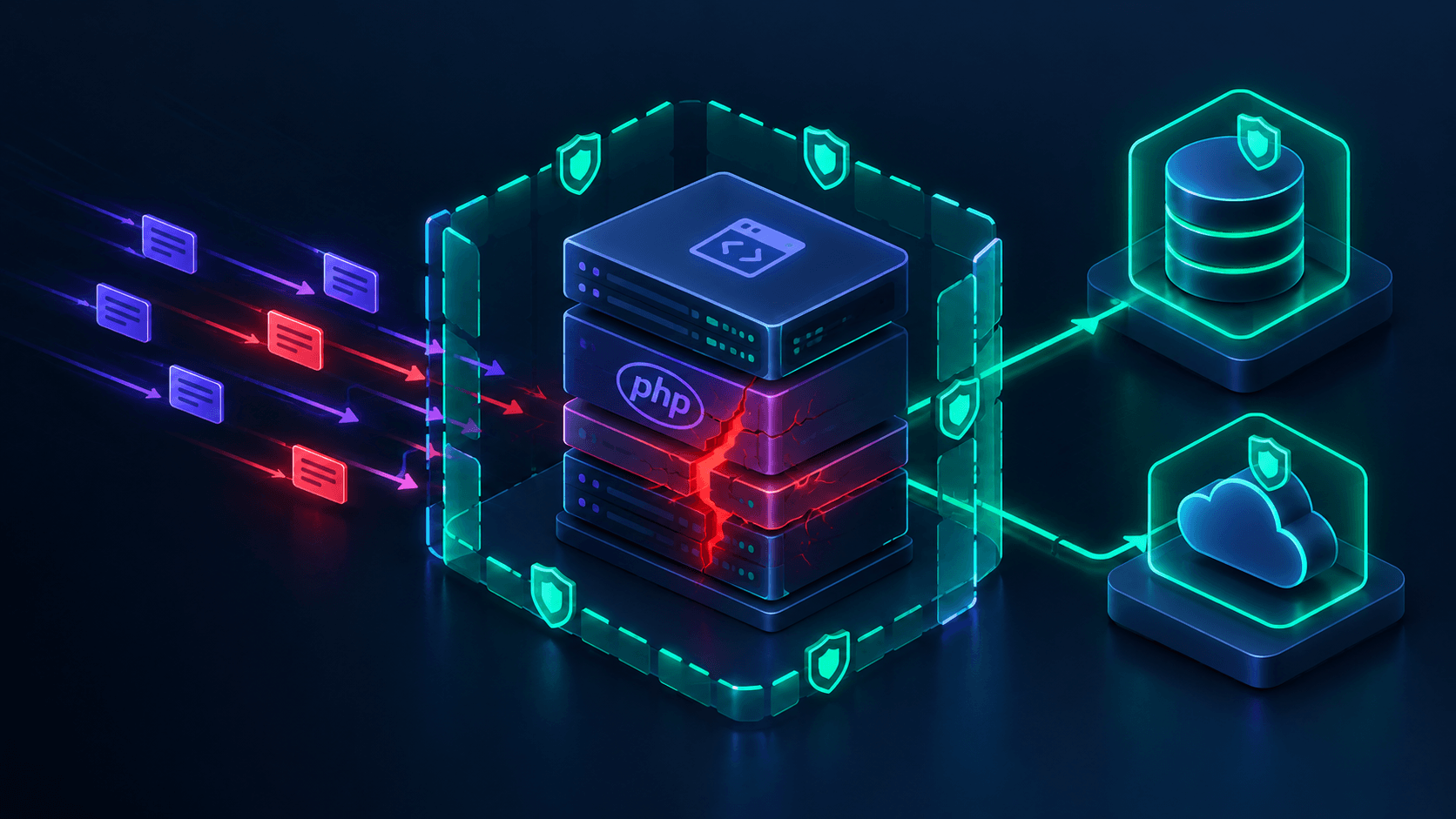
Space-based AI data centers are a proposed way to move selected machine-learning workloads into orbit, where satellites could use solar power and communicate through optical links. Google's Project Suncatcher is testing the hardware and systems behind that idea; its first satellite is an engineering prototype, not a proven commercial data center.
The distinction matters: a successful launch and a confirmed radio contact do not prove that four TPUs can deliver useful work, stay cool, or beat Earth on cost. This guide separates what Google has announced from what is still unproven, then gives you a useful-compute formula, a lifecycle cost equation, a five-question workload-placement test, and TypeScript patterns for intermittent compute, finishing with a 30-day plan for validating the riskiest assumption in your own AI product.
1. What Did Google Actually Launch on October 1, 2026?
Google launched one prototype satellite, built with Planet and carrying four Tensor Processing Units (TPUs), into low Earth orbit on SpaceX's Transporter-18 rideshare mission on October 1, 2026. Google's public launch update confirmed contact and said the satellite was operating as expected; it described the mission as the beginning of in-orbit data collection, not as a production deployment.
That wording is important because several different milestones are easy to collapse into one headline:
- Launch: the spacecraft reaches its intended orbit.
- Commissioning: the operator establishes contact, checks spacecraft systems, and prepares the payload.
- Hardware validation: the team measures how components behave under real radiation and thermal conditions.
- Workload demonstration: an accelerator boots, executes a defined model workload, and returns a verifiable result.
- Operational service: the system repeatedly completes useful workloads at a measurable reliability, latency, and cost.
Google's October 1 announcement establishes the first two milestones and says the team will gather data on the TPUs' response to the physical stress of spaceflight and the radiation and thermal extremes of orbit. It does not publish a completed in-orbit inference result. NPR's reporting describes the planned use of a version of Gemma to answer simple queries, running for 15 minutes at a time because of heat, but that plan should not be rewritten as an already demonstrated result. See Google's in-orbit update and NPR's report on the launch.
What is in the prototype?
The reported spacecraft is approximately refrigerator-sized and carries four Google TPUs, with solar power reported at roughly one kilowatt. The payload is deliberately small compared with a terrestrial data-center cluster. Its purpose is to expose real hardware to the environment that cannot be fully reproduced by a laboratory test.
The engineering questions include:
- Do the accelerators remain functional after launch vibration and acceleration?
- How do memory and compute behave under radiation exposure?
- Can heat pipes and radiators keep the electronics within their operating envelope?
- Can the spacecraft maintain power, thermal control, and communications during the mission?
- Which failures can be detected, recovered from, or tolerated without physical repair?
The mission should be read as a pathfinder. Four accelerators in one spacecraft cannot establish the economics or reliability of a distributed orbital cluster. They can, however, reveal whether assumptions made during ground testing survive actual flight conditions.
What is planned next?
Google's original November 2025 announcement described a learning mission with Planet and a plan to test two prototype satellites in orbit by early 2027. The later 2026 launch update confirms that the first prototype is now in orbit. Google's September 2026 technical explainer says a two-satellite experiment in 2027 is intended to test high-bandwidth laser communication between spacecraft.
Those are separate milestones: the first mission examines hardware in orbit; the later experiment is intended to test whether satellites can establish the optical links needed for a larger compute cluster. Neither should be described as a deployed orbital data center.
2. Why Could Space-Based AI Data Centers Be Attractive in 2026?
Space-based AI data centers are attractive because a carefully selected orbit could provide high solar exposure while avoiding some terrestrial constraints on land, grid connections, and cooling-water access. The advantage is conditional: solar energy is useful only when a spacecraft can convert it into sustained, thermally manageable compute and deliver the result to the right place.
Google's research concept focuses on compact satellite constellations in dawn–dusk, sun-synchronous low Earth orbit. In that type of orbit, solar panels can receive sunlight for much of the orbital period. Google has said that, in the right orbit, solar panels could be up to eight times more productive than on Earth and generate power nearly continuously. That is a design-level comparison, not a measured performance figure for the first Suncatcher prototype.
The first prototype and the future concept must remain separate. NPR corrected its launch story to clarify that the initial spacecraft flies in a standard orbit and uses batteries; the sun-synchronous, battery-light design is the plan for future satellites, not a feature of the current test vehicle.
The terrestrial problem Suncatcher is trying to address
Large AI deployments need more than accelerators. They need electrical capacity, power distribution, cooling, land, network connectivity, construction time, and operations staff. A company may have enough capital to buy accelerators but still face a delay getting a data center connected to a suitable grid.
An orbital system could avoid competing for a terrestrial grid connection at the point of compute. It would not eliminate infrastructure costs; it would move them into spacecraft, launch services, solar arrays, thermal hardware, communications, ground stations, and mission operations.
The distinction is similar to moving a workload from a central cloud region to an edge device. The compute may become closer to one source of data, but the system still has to move model artifacts in, move results out, handle failures, and maintain the device. A satellite is an unusually constrained edge node with a much higher replacement cost.
Solar input is not useful compute
A common mistake is to translate a solar-power advantage directly into an equivalent increase in AI throughput. That skips the systems that sit between incoming energy and completed work.
Consider a hypothetical accelerator subsystem rated at 1,000 watts. If thermal limits allow it to operate productively for 25% of the measurement period, its average active power is 250 watts before accounting for failed jobs, communication waits, or other overhead. For scale, NPR reports 15-minute Gemma windows on the prototype; the resulting duty cycle depends on how often those windows repeat, which Google has not published.
If the same hypothetical subsystem reaches a 60% duty cycle, the average active power becomes 600 watts. That is 2.4 times the previous result, without changing the accelerator's rated power. This is an illustration of utilization arithmetic, not a claim that Suncatcher has achieved either duty cycle.
The broader lesson applies to terrestrial AI infrastructure too: nameplate capacity is not the same as completed work. A product team should measure successful requests per dollar, not simply count accelerator hours or quote peak tokens per second.
3. How Does the Proposed Suncatcher Architecture Work?
The proposed Suncatcher architecture has three connected layers: satellite compute nodes, optical links between satellites, and a ground segment for control and data exchange. Each node must coordinate power generation, compute, thermal rejection, spacecraft control, and communications as one system rather than as independent hardware components.
The scale gap is large. Google's 2025 research paper models clusters on the order of 81 satellites within roughly a one-kilometer radius, with each satellite carrying dozens of TPUs. The prototype now in orbit is one spacecraft with four.
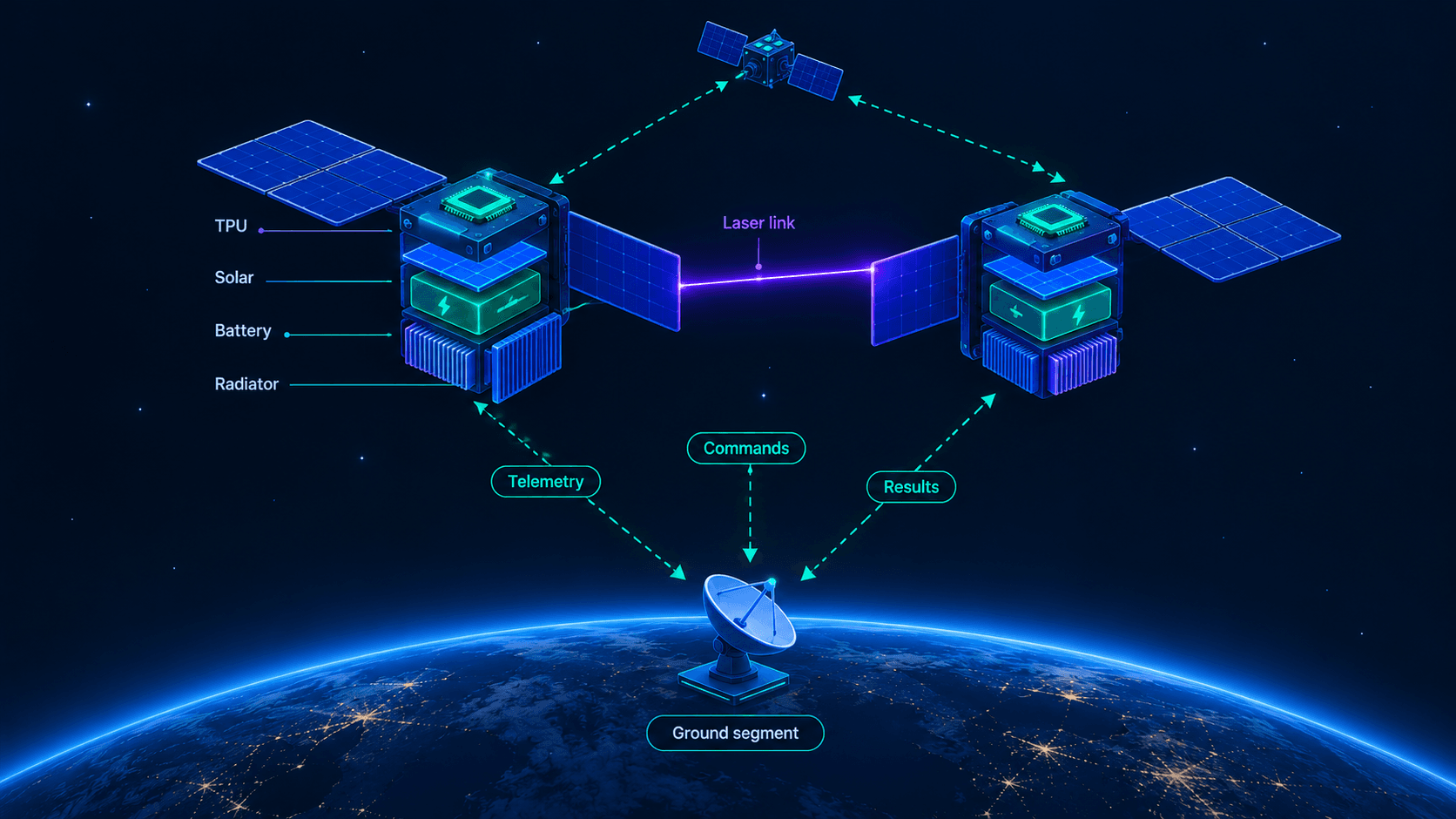
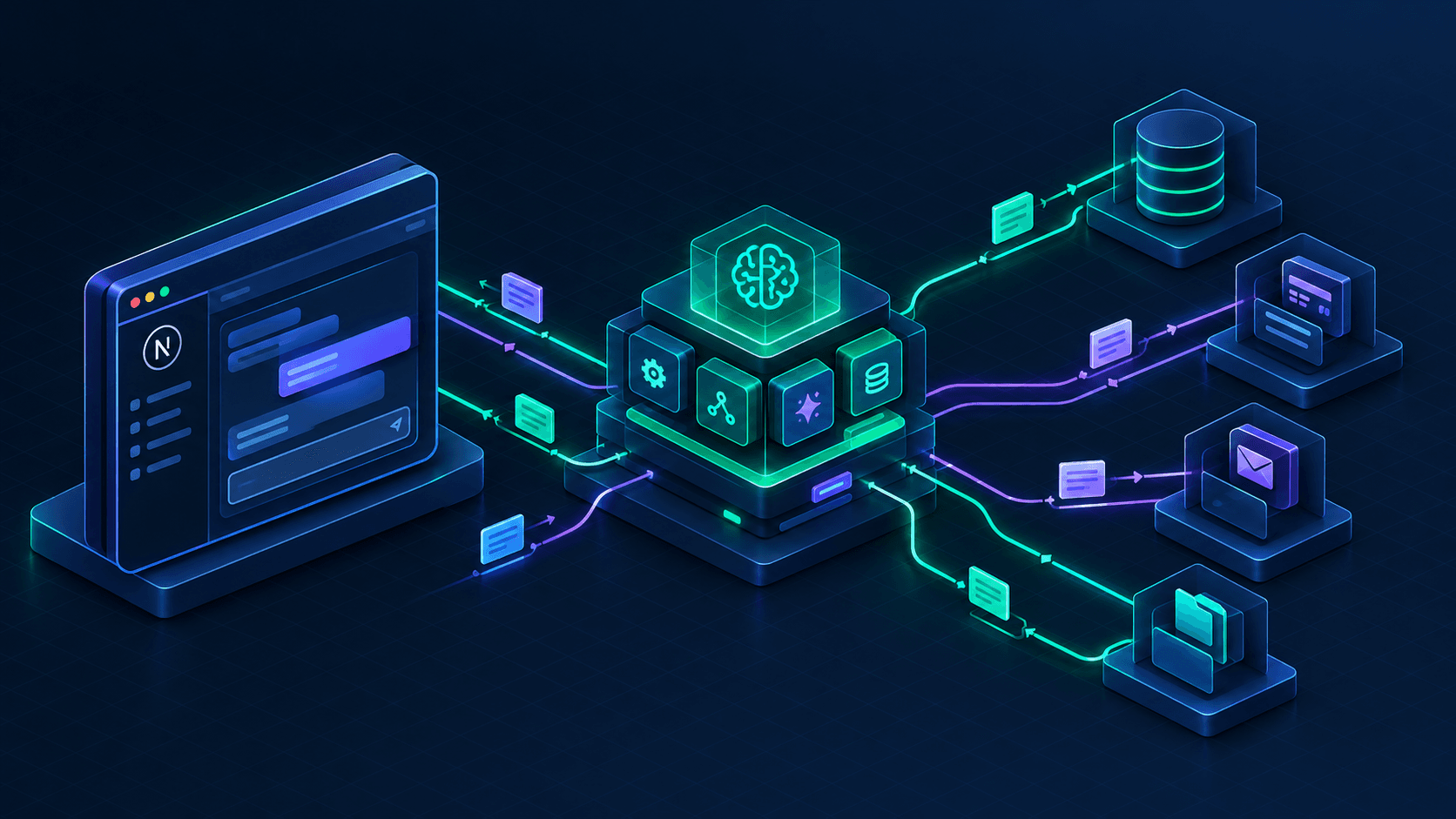
Figure 1: A conceptual orbital compute node connects to neighboring satellites through optical links and exchanges control information and results with a ground segment.
Layer 1: the orbital compute node
A satellite compute node combines several subsystems:
- TPU accelerators: execute machine-learning inference or, in a sufficiently capable future cluster, portions of distributed workloads.
- Solar arrays: convert incident sunlight into electrical power.
- Energy storage: supplies power when generation and demand do not align. The first prototype uses batteries.
- Thermal paths: transfer heat from electronics through heat pipes and spacecraft structures to radiators.
- Attitude control: maintains spacecraft orientation and helps point solar arrays and optical terminals.
- Onboard software: manages workload execution, telemetry, health checks, and recovery behavior.
The design is not simply a server bolted to a satellite. Every component competes for mass, power, volume, and thermal capacity. Increasing the number of accelerators may increase compute density, but it also increases heat production, power demand, and the size of the supporting systems.
Layer 2: the optical network
Future Suncatcher satellites are intended to communicate with neighboring spacecraft through free-space optical inter-satellite links. Instead of using a conventional data-center cable, the system would transmit data through tightly directed laser beams.
The challenge is not merely sending a signal across space. The terminals must point accurately at moving neighbors, acquire and maintain links, handle handovers, and recover when a connection is interrupted. Google's 2026 explainer compares the required precision to hitting a coin-sized target from miles away while both endpoints are moving. The underlying Google research paper reports a bench-scale link of 800 Gbps in each direction (1.6 Tbps total) and says data-center-class performance would need inter-satellite links in the tens of terabits per second, which is the gap between today's optical-link capabilities and what tightly coupled machine-learning clusters require.
For machine learning, network behavior determines which parallelization strategies are realistic. A model that can run independently on one node may tolerate intermittent communication. A tightly coupled training job that frequently exchanges activations or gradients may not.
Layer 3: the ground segment
The ground segment remains essential. It can handle mission planning, commands, telemetry, model and software delivery, scheduling, and result retrieval. The amount of data sent down should depend on the workload: an onboard classifier might return a small detection record rather than an entire image collection.
This is the same architectural principle used in edge computing: process data near its source when local processing reduces transfer costs or improves response time. Orbit changes the environment and the failure modes, but it does not remove the need for a control plane, observability, or safe deployment practices.
Why the layers cannot be designed independently
A larger accelerator payload changes the thermal design. A larger radiator changes spacecraft mass. More mass changes launch requirements. A more distributed workload increases network traffic. More traffic increases optical-terminal and scheduling demands. The system is therefore a coupled optimization problem.
A design that maximizes compute per satellite may be worse than one that maximizes completed workload per kilogram over the spacecraft's useful lifetime. The correct metric depends on what the constellation is expected to deliver and how often it can deliver it.
4. What Are the 4 Hardest Engineering Constraints for Space-Based AI Data Centers?
The four most important constraints are heat rejection, radiation reliability, launch and replacement economics, and optical-network performance. Each one can reduce useful compute even when the accelerator itself is functioning correctly.
1. Heat rejection in a vacuum
On Earth, data centers can move heat through air, chilled water, direct-to-chip liquid loops, and large mechanical cooling systems. In a vacuum, a satellite cannot rely on convection to carry heat away from its electronics. Heat must be conducted through the spacecraft and rejected through radiating surfaces.
Google's 2026 explainer identifies cooling as a crucial research challenge and describes heat pipes and radiators as part of the approach. The first prototype is intended to test the system in orbit after ground testing in a thermal-vacuum chamber. Google's Travis Beals told NPR the radiators are among the heaviest components on the current mission, which matters because every extra kilogram raises launch cost.
The trade-off is physical. More accelerator activity produces more heat. More heat requires more thermal transport and radiator capacity. Larger or heavier thermal systems affect spacecraft design and launch mass. A higher peak compute rating is not useful if the spacecraft cannot keep the hardware inside its permitted temperature range.
The reported 15-minute operating windows for the planned Gemma workloads illustrate why thermal limits matter. They are a reported mission constraint, not a published, independently measured long-run utilization figure.
2. Radiation and hardware reliability
Radiation can cause transient errors, memory corruption, and long-term degradation. The impact depends on the component, shielding, orbit, exposure, and error-correction strategy. A transient error in a recoverable inference job is different from corruption in a control process or an unrecoverable fault in a spacecraft subsystem.
Google tested its Trillium TPUs in a 67 MeV proton beam at the University of California, Davis, while the chips ran machine-learning workloads. Google's 2025 paper reported that high-bandwidth memory was the most sensitive component, showing irregularities only after about 2 krad(Si) of cumulative dose, against an estimated shielded five-year mission dose of 750 rad(Si), with no hard failures up to the maximum tested 15 krad(Si) on a single chip. Google's September 2026 explainer repeats the headline result: the chips tolerated more than a five-year mission dose. These are company-reported ground-test results; they are not a substitute for observing the hardware in orbit.
A resilient compute platform would need several layers of protection:
- Error detection and correction where supported by the hardware.
- Checksums for model artifacts and transferred data.
- Watchdogs for stalled processes.
- Periodic checkpoints for resumable workloads.
- Redundant copies of critical state.
- A recovery path that does not depend on the failed component.
The software should assume that a task can be interrupted, retried, or delayed. It should not assume that every worker is continuously reachable.
3. Launch mass and limited repairability
A terrestrial server can be replaced or upgraded inside a facility. A satellite fault may mean losing the remaining useful life of the entire spacecraft or payload. This changes the economics of redundancy: extra hardware has a launch cost, but insufficient redundancy can turn a small component failure into a complete loss of service.
Launch cost is not the only mass-related expense. The spacecraft also needs structure, power systems, thermal hardware, communications, attitude control, and radiation protection. Every subsystem must justify its mass against the useful work it enables.
This makes repairability a first-order architectural concern. Software updates can fix some problems, but they cannot replace a failed radiator, repair a damaged solar array, or restore a physically failed optical terminal.
4. Optical links and distributed-compute overhead
A satellite constellation needs predictable connectivity to behave like a cluster. Laser links must acquire and maintain alignment between moving spacecraft. A future system also needs routing, congestion management, time synchronization, fault detection, and a strategy for partitions.
Not every AI workload needs the same network. Independent inference tasks can be queued and executed on one node. Tensor parallelism and synchronous distributed training can require frequent exchanges between accelerators. The second class is much less forgiving of variable latency and interrupted links.
A useful engineering question is not "How fast is the laser?" It is "How much useful work completes after communication, synchronization, retransmission, and scheduling overhead are included?"
A practical failure comparison
Size the satellite around accelerator throughput, then treat heat, radiation, and network interruptions as secondary implementation details.
The design can look impressive on a specification sheet while delivering little completed work after thermal throttling, failed tasks, and communication gaps are included.
Size the payload around sustained thermal limits, fault recovery, useful duty cycle, link availability, and completed workload volume.
The system is evaluated on the work it can reliably deliver across its useful life, not on the theoretical peak of an isolated accelerator.
As a certified full-stack engineer who is also certified in building MVPs, I put constraints like these into a risk register before approving any milestone. Each risk needs an owner, a measurable test, a failure threshold, and a fallback plan. "The prototype works" is not a useful acceptance criterion unless the team defines what worked, under which conditions, for how long, and with what evidence.
5. Which AI Workloads Actually Belong in Orbit?
The strongest early candidates for orbital AI compute are workloads whose source data is already in space, whose output is much smaller than the input, and whose execution can tolerate intermittent connectivity. General-purpose consumer chat and tightly synchronized training are weaker candidates until the network, thermal, and economics questions are answered.
| Workload | Potential orbital fit | Reason | Main obstacle |
|---|---|---|---|
| Satellite image classification | High potential | Process imagery near its source and downlink detections | Model updates and thermal budget |
| Earth-observation event detection | High potential | Return alerts or coordinates instead of raw imagery | Reliability and revisit timing |
| Autonomous spacecraft operations | High potential | Local decisions can continue during ground-link gaps | Safety assurance and fault tolerance |
| Batch model training | Unproven | Could use energy in orbit if a large cluster becomes viable | Interconnect bandwidth and synchronization |
| Consumer chat inference | Weak near-term fit | Users expect predictable latency and availability | Ground-to-orbit routing and service reliability |
| Regulated enterprise processing | Weak near-term fit | Data residency and audit requirements are strict | Jurisdiction, governance, and control |
The data-gravity test
Start with the location of the input, not the location of the accelerator. If a satellite captures an image, transmitting the raw image to Earth for every processing step may consume bandwidth and delay the result. Running a compact model onboard could identify a cloud formation, ship, wildfire indicator, or other event and transmit only the relevant metadata.
That is a more defensible early use case than moving a customer-facing SaaS assistant into orbit. A RAG assistant typically depends on user requests, frequently updated data, retrieval services, authorization checks, and low-latency responses. Moving only the model to orbit would not move the rest of that system with it.
Score a workload before moving it
I would score a proposed workload against five questions:
- Data location: Is most of the input already in orbit?
- Output size: Can the system return a compact result instead of transferring the full input?
- Execution window: Can the task pause, retry, or wait for a later compute window?
- Model stability: Can the deployed model remain unchanged for a useful period?
- Failure tolerance: Can the mission continue safely if a job fails or a link disappears?
A workload that scores well on all five deserves a prototype. A workload that needs continuous user interaction, frequent model updates, and synchronous access to terrestrial databases probably belongs on Earth.
This is workload placement, not a binary decision about whether space or Earth is the future of AI.
6. How Should Engineers Build Software for Intermittent Compute?
Engineers should treat orbital inference as durable asynchronous work rather than as a synchronous HTTP request. The same pattern is useful for disconnected edge devices, mobile workers, industrial gateways, and background AI jobs that must survive restarts.
A web API should accept a task, validate it, persist it, and return a job identifier. A worker should claim the task when it is available, record its progress, and either complete it or schedule a retry. The user-facing system should read job state rather than hold an open request while waiting for a satellite.
Use a durable job contract
The following TypeScript example defines a narrow job model. The database remains the source of truth; the queue or worker process is only an execution mechanism. In a real deployment, the idempotencyKey must have a unique database constraint, and inputRef should point to durable object storage rather than a large payload embedded in a queue message.
export type JobStatus =
  | "queued"
  | "running"
  | "completed"
  | "deferred"
  | "failed";

export interface InferenceJob {
  id: string;
  tenantId: string;
  idempotencyKey: string;
  modelVersion: string;
  inputRef: string;
  status: JobStatus;
  attempts: number;
  maxAttempts: number;
  nextRunAt: Date;
  leaseExpiresAt: Date | null;
  outputRef: string | null;
  lastError: string | null;
}

export interface NewInferenceJob {
  tenantId: string;
  idempotencyKey: string;
  modelVersion: string;
  inputRef: string;
}

export async function createInferenceJob(
  db: {
    insertOrGetByIdempotencyKey(
      job: NewInferenceJob
    ): Promise<InferenceJob>;
  },
  input: NewInferenceJob,
): Promise<InferenceJob> {
  if (!input.tenantId || !input.idempotencyKey) {
    throw new Error("tenantId and idempotencyKey are required");
  }

  if (!input.modelVersion || !input.inputRef) {
    throw new Error("modelVersion and inputRef are required");
  }

  // The database must enforce uniqueness on (tenant_id, idempotency_key).
  return db.insertOrGetByIdempotencyKey(input);
}
The important behavior is idempotency. If a client loses its connection after submitting a job, it may retry the request without knowing whether the first request committed. The unique key lets the server return the existing job rather than create duplicate work.
One gotcha to plan for in any queue-backed SaaS feature: the first time two requests race with the same key, PostgreSQL raises SQLSTATE 23505 and logs an error like duplicate key value violates unique constraint "inference_jobs_tenant_idem_key". That error means the constraint did its job. Catch it and return the existing row, or write the insert as INSERT ... ON CONFLICT (tenant_id, idempotency_key) DO UPDATE SET idempotency_key = EXCLUDED.idempotency_key RETURNING * so a row always comes back.
ALTER TABLE inference_jobs
  ADD CONSTRAINT inference_jobs_tenant_idem_key
  UNIQUE (tenant_id, idempotency_key);
For a multi-tenant SaaS product, the uniqueness boundary should include the tenant. Otherwise, two customers who happen to choose the same key could collide. Authorization must also be checked when reading the job; knowing a job identifier is not permission to access its input or output.
Claim work atomically and recover expired leases
A worker must not assume that it is the only process attempting to execute a job. Two workers may wake at the same time after a reconnect. PostgreSQL can coordinate claims using a transaction and FOR UPDATE SKIP LOCKED.
const claimNextJobSql = `
  WITH candidate AS (
    SELECT id
    FROM inference_jobs
    WHERE status IN ('queued', 'deferred')
      AND next_run_at <= NOW()
      AND attempts < max_attempts
    ORDER BY next_run_at ASC
    LIMIT 1
    FOR UPDATE SKIP LOCKED
  )
  UPDATE inference_jobs AS job
  SET status = 'running',
      attempts = attempts + 1,
      lease_expires_at = NOW() + INTERVAL '5 minutes'
  FROM candidate
  WHERE job.id = candidate.id
  RETURNING job.*;
`;

interface SqlClient {
  query<T>(sql: string, values?: unknown[]): Promise<{ rows: T[] }>;
}

export async function claimNextJob(
  db: SqlClient,
): Promise<InferenceJob | null> {
  const result = await db.query<InferenceJob>(claimNextJobSql);
  return result.rows[0] ?? null;
}
The five-minute lease is an example configuration, not a universal timeout. A production worker should renew its lease while it is healthy and executing, from a timer that is independent of the inference call. If the heartbeat shares a blocked event loop with a long synchronous call, the lease expires mid-job, a second worker claims the same row, and you get duplicate output. If a worker disappears, a recovery process can find expired running jobs and return them to deferred or mark them failed according to the retry policy.
The inference operation itself must also be idempotent or write its result using a stable output key. A database lease prevents two workers from claiming the same job simultaneously, but it cannot guarantee that a remote model call will never be repeated after a timeout.
Bound retries and make failure visible
Retries are useful only when they are bounded and observable. A worker should distinguish a temporary network error from invalid input, an unsupported model version, or a permanent authorization failure.
function retryDelaySeconds(attempt: number): number {
  const base = 30;
  const maximum = 60 * 60;
  const exponential = base * 2 ** Math.max(0, attempt - 1);

  // Add jitter so a fleet does not reconnect and retry in lockstep.
  const jitter = Math.random() * 0.2 * exponential;

  return Math.min(Math.round(exponential + jitter), maximum);
}

export async function handleJobFailure(
  db: {
    deferOrFail(
      id: string,
      status: "deferred" | "failed",
      nextRunAt: Date | null,
      errorMessage: string,
    ): Promise<void>;
  },
  job: InferenceJob,
  error: unknown,
): Promise<void> {
  const message =
    error instanceof Error ? error.message : "Unknown worker failure";

  const exhausted = job.attempts >= job.maxAttempts;

  await db.deferOrFail(
    job.id,
    exhausted ? "failed" : "deferred",
    exhausted
      ? null
      : new Date(Date.now() + retryDelaySeconds(job.attempts) * 1000),
    message.slice(0, 2_000),
  );
}
This code illustrates retry policy, not a complete spacecraft flight-control system. A production implementation also needs structured logs, metrics, dead-letter handling, schema migrations, tenant-scoped authorization, and tests for duplicate delivery and worker crashes.
Separate model software from safety-critical control
A model deployment should not have unrestricted authority over spacecraft control. The inference runtime, model artifacts, telemetry services, and flight-critical software need separate permissions and release procedures.
For a SaaS analogy, do not give an LLM unrestricted access to billing, account deletion, or production infrastructure simply because it can call tools. Put deterministic policy checks between the model and consequential actions. The same principle applies more strongly when a software failure can affect a physical spacecraft.
If you are designing a product with asynchronous AI jobs, retrieval pipelines, or agent workflows, book a technical architecture discussion. The goal is to validate the execution model, failure boundaries, and operating cost before the product depends on them.
7. What Would Space-Based AI Compute Cost Compared With Earth?
There is no verified public price per useful AI operation for Project Suncatcher, so a precise claim that orbital compute is cheaper would be premature. The right comparison is lifecycle cost divided by successfully completed work over the system's useful operating life.
A cost model needs to include more than the accelerator and the electricity it consumes. It must account for the spacecraft bus, payload, solar arrays, batteries where required, thermal system, launch, ground operations, communications, insurance where applicable, replacement, and failed or unavailable operating time.
This equation deliberately uses completed work rather than theoretical FLOPs. Two systems can have similar peak compute but very different economics if one spends more time waiting for thermal recovery, communications, or maintenance.
What belongs in the orbital cost model?
- Spacecraft and payload: accelerators, memory, structure, power electronics, thermal hardware, and optical terminals.
- Launch and deployment: the allocated launch cost, integration, testing, and deployment services.
- Ground operations: mission control, telemetry, scheduling, model distribution, and result retrieval.
- Reliability: redundancy, fault detection, software recovery, and the expected cost of early hardware failure.
- Useful lifetime: how long the spacecraft can deliver accepted work before degradation or replacement.
- Network overhead: time spent acquiring links, transferring data, synchronizing jobs, and recovering from interruptions.
A terrestrial comparison needs the same discipline. Include accelerators, facility power, cooling, networking, real estate, construction, staffing, maintenance, utilization, and depreciation. Comparing orbital launch cost against only a terrestrial electricity bill would be an incomplete calculation.
Why launch price is the swing factor
Google's research frames launch price as the variable that decides whether orbit can ever compete. Its projection, reported alongside the 2026 launch, is that launch prices would need to fall toward roughly $200 per kilogram by around 2035 before orbital launch costs per kilowatt-year become comparable to terrestrial energy costs. That is a company projection about future launch markets, not a measured result from the current prototype.
NPR's coverage adds the sceptical view: launches are costly, repairs are difficult, and a Carnegie Mellon engineer quoted in the story said the cost and complexity of orbital operations could be amplified by a factor of 10, maybe 100, so there has to be a big payoff. Project lead Travis Beals acknowledged to NPR that technical feasibility does not help if the system is always too expensive to be practical.
Why utilization changes the result
Imagine two hypothetical systems with identical rated accelerator capacity. System A completes useful work during 25% of the available period. System B completes useful work during 60%. Before considering differences in hardware, launch, or operating expense, System B delivers 2.4 times as much active accelerator time across that period.
That does not mean its cost per inference is automatically 2.4 times lower. The additional thermal hardware, energy storage, or engineering needed to reach the higher duty cycle may cost more. The correct decision compares the incremental lifetime cost with the incremental successful workload volume.
What would make orbit economically credible?
A serious commercial case would need evidence for all of the following:
- A repeatable useful workload running on orbiting hardware.
- A measured duty cycle over a meaningful observation period.
- Demonstrated thermal stability at the target power level.
- Radiation and fault-recovery results from actual flight operations.
- Optical-link throughput and availability under realistic orbital geometry.
- A defensible launch, replacement, and ground-operations cost model.
- A workload customer willing to pay for the delivered result.
Google's research paper discusses the long-term system design and the engineering assumptions behind it. It does not establish a retail price for orbital inference. The commercial question remains open.
How does the alternative stack compare?
| Approach | Primary strength | Primary constraint | Likely near-term fit |
|---|---|---|---|
| Terrestrial data center | Mature operations and repairability | Grid, land, cooling, and permitting | Most production AI |
| Nuclear-backed campus | Potential for sustained high-density power | Siting, permitting, and build time | Large persistent clusters |
| Edge inference | Local response and reduced data transfer | Limited power and hardware capacity | Robotics, devices, and local processing |
| Model compression | Lower compute per request | Quality and capability trade-offs | Cost-sensitive AI products |
| Orbital compute | Potential solar access and space-native data processing | Launch, thermal, radiation, and network limits | Selected space-native workloads |
For founders, the immediate lesson is not to wait for orbital infrastructure. It is to avoid paying for compute your product does not need. Model selection, quantization, caching, batching, retrieval design, and asynchronous execution can change unit economics without introducing spacecraft-level complexity.
For a practical view of how infrastructure choices affect startup budgets, see the real cost of building a SaaS MVP and the guide to building a SaaS MVP with Next.js .
8. What Should Founders and Engineers Learn From Suncatcher in 2026?
The most useful lesson from Project Suncatcher is to test the riskiest system assumption before scaling the architecture. Google is treating orbital AI compute as a sequence of engineering experiments: first expose hardware to space, then learn from the results, and later test the inter-satellite links needed for a larger system.
That is a disciplined approach to infrastructure uncertainty. A full constellation would be expensive to build before the team knows whether the accelerator payload, thermal system, radiation strategy, and network can work together.
Translate the experiment into an MVP method
Having architected SaaS MVPs from idea to launch, I use the same logic when a product depends on an uncertain technical capability:
- Write the assumption: identify the single thing that must be true for the product to work.
- Define the smallest test: build only enough to produce evidence about that assumption.
- Choose a measurable result: decide what success and failure look like before the test begins.
- Keep the failure observable: capture logs, traces, metrics, and the conditions that produced the result.
- Set the next investment gate: expand only when the evidence justifies the additional scope.
For Suncatcher, the first satellite is a hardware and environment test. The next two-satellite experiment is intended to test optical connectivity. A later system would need to demonstrate useful distributed workloads and sustainable economics. Each stage should earn the next stage.
What an AI SaaS founder can apply immediately
A startup building an AI product does not need to copy Google's hardware. It can copy the decision discipline.
Suppose a founder wants to launch a document-analysis SaaS. The riskiest assumption may not be whether the dashboard can be built. It may be whether the model can extract the required fields accurately enough, at a cost the target customer will accept, across the documents the customer actually uses.
The smallest meaningful test could be a representative evaluation set, a single extraction pipeline, human review for uncertain outputs, and a cost report. It does not need a multi-agent architecture, complex billing portal, or a large administration system before the core outcome is validated.
Measure at least four things:
- Quality: how often does the system produce an accepted result?
- Latency: how long does a successful result take?
- Unit cost: what does one accepted result cost across model, retrieval, storage, and infrastructure?
- Recovery: what happens when the provider times out, the input is malformed, or the job is retried?
The order matters. A feature that is impressive in a demo but cannot meet a customer's quality or cost threshold is not validated.
A 30-day validation sequence
A focused first month can produce useful evidence without pretending that every product can be production-ready in four weeks.
Days 1–5: define the workload. Interview target users, collect representative inputs, define the accepted output, and write down failure cases. Avoid starting with a technology shopping list.
Days 6–10: build the smallest technical test. Connect one model, one data source, and one execution path. Keep the interface minimal. Make every request traceable to its input, model version, and output.
Days 11–17: evaluate real examples. Run the evaluation set, label failures, measure latency, and calculate cost per accepted result. Separate model errors from retrieval, parsing, and application errors.
Days 18–24: add production boundaries. Implement authentication, tenant isolation, rate limits, retries, structured logs, and human review for consequential decisions. Do not give an autonomous model permissions the product does not require.
Days 25–30: run a narrow pilot. Put the workflow in front of a small group of real users. Observe where they reject results, repeat work, or need manual intervention. Use those observations to decide whether to expand, change the model, or narrow the use case.
This is not a universal delivery guarantee. It is a way to make the first month produce evidence instead of a large pile of unvalidated features. If you would rather have someone who has run this sequence do it with you, you can hire a SaaS MVP developer or book a call to scope your riskiest assumption first.
The decision rule
Do not scale a system because the demo worked once. Scale when the core workload meets its quality threshold, its unit economics are understood, its failure modes are observable, and a real user values the result enough to keep using it.
That principle applies to a four-TPU satellite experiment and to a two-person SaaS startup. The cost of a failed assumption is different, but the logic is the same.
9. Conclusion and Actionable Roadmap
Google Project Suncatcher is a serious research effort into space-based AI infrastructure, but the public evidence should be described precisely. The first prototype launched on October 1, 2026, carries four TPUs, and has established contact with the ground. Google's public update describes the start of in-orbit data collection; it does not establish a completed, sustained AI workload or a commercially viable orbital data center. The hard problems are concrete: heat must be rejected in a vacuum, radiation errors must be contained, launch mass must be justified, and laser links must reach the tens of terabits per second a real cluster needs.
For engineers and founders, the takeaway is to measure useful work under real constraints. Do not confuse peak capacity with sustained throughput, a successful launch with a successful workload, or a research architecture with a commercial service. Test the riskiest assumption, instrument the result, and let evidence determine the next investment.
Validate the workload before scaling the architecture: I help founders scope, architect, and ship production-ready AI SaaS MVPs using Next.js, TypeScript, Node.js, PostgreSQL, and practical cloud infrastructure. Contact me today to book a 30-minute AI architecture audit.