AI Coding Agents in CI/CD: The GitHub Outage Lesson

Written by
Bhalli B
Full-Stack Engineer & SaaS MVP Architect
Certified Full-Stack Developer & MVP Specialist · Lahore, Pakistan
GitHub logged 13 separate incidents across nine different days in the first 17 days of August 2026 alone, and the pattern those outages expose isn't "GitHub is unreliable" - it's that AI coding agents wired directly into a single vendor's API, with no fallback path, fail in a way human developers simply don't: a human can keep coding locally and push later, but a Copilot coding agent, a Claude Code agent running inside GitHub Actions, or any automation that reasons over live API calls has nothing to fall back to when that API returns errors. The August 17, 2026 outage is the clearest recent case study, and this post breaks down exactly what it teaches about architecting an AI-agent-driven pipeline that survives its dependencies going down.
1. What Do 2026's GitHub Outages Actually Reveal About AI-Agent Pipeline Risk?
The direct answer: GitHub Actions' rolling 90-day uptime fell to 99.33% as of mid-August 2026 - equivalent to more than 14 hours of downtime in three months - which is below the three-nines (99.9%) threshold most enterprise SLAs treat as a baseline expectation for a dependency this critical.
The August 17 incident is the sharpest example. It opened at 13:40 UTC, and within twenty minutes had spread across API Requests, Actions, Webhooks, Issues, and Pull Requests. Most services were reported mitigated by 16:59 UTC, roughly 3.3 hours later, but GitHub Copilot - including its coding agent - remained in a major outage state well past that point, while roughly one in five requests to GitHub's web interface and API were failing and archive/raw-content downloads were failing at close to 50%. It followed a nearly 10-hour-20-minute Actions outage on August 6 that specifically degraded Copilot code review and its coding agent, and a 3-plus-hour outage in late May that returned a false "your account is suspended" error to developers mid-CI run.
2. Why Does an AI Coding Agent Fail Differently Than a Human Developer During an Outage?
In practice, this means the risk isn't symmetric between a human engineer and an AI agent doing the same job, because a human developer who loses access to GitHub can still write code, run tests locally, and queue up a push for when service returns - the work doesn't stop, it just delays. An AI coding agent embedded in a pipeline (opening PRs, triggering Actions runs, reading issue context via the API) has no equivalent fallback: its entire operating surface is the API that just went down.
What this costs you if you get it wrong: a Copilot coding agent or a custom Claude Code agent mid-task during an outage doesn't pause gracefully - it either hangs on a timed-out API call, retries into a rate limit (compounding the platform's own degraded capacity), or silently fails a step the human on the other end assumed had succeeded. I've seen exactly this pattern in a client's deploy pipeline: an agent-triggered Actions workflow that assumed a 200 response meant "proceed," with no explicit handling for a 5xx or a stalled webhook - the workflow sat in a queued state for over two hours during the August 6 incident before anyone noticed the deploy hadn't actually happened.
3. How Do You Architect a Pipeline That Doesn't Have a Single Point of Failure on GitHub?
// Agent calls the GitHub API directly, no retry ceiling,
// no awareness of platform status
async function triggerDeploy(repo: string, ref: string) {
  return octokit.actions.createWorkflowDispatch({ repo, ref });
}
During a degraded-performance window, this either hangs indefinitely, retries into GitHub's already-stressed rate limits, or reports false success on a request that silently queued and never ran.
// lib/github-circuit-breaker.ts
// Checks GitHub's own status API before letting an agent action
// through, and short-circuits to a fallback path instead of
// hammering an already-degraded service.
import { Octokit } from "octokit";

const octokit = new Octokit({ auth: process.env.GITHUB_TOKEN });

async function isActionsHealthy(): Promise<boolean> {
  const res = await fetch("https://www.githubstatus.com/api/v2/components.json");
  const data = await res.json();
  const actionsComponent = data.components.find((c: any) => c.name === "Actions");
  // "operational" is the only status that should let automated
  // dispatch proceed - "degraded_performance" and worse route
  // to the fallback path instead.
  return actionsComponent?.status === "operational";
}

export async function triggerDeploy(repo: string, ref: string) {
  if (!(await isActionsHealthy())) {
    // Don't retry-storm a degraded service - hand off to a
    // self-hosted fallback runner and alert a human instead.
    await triggerFallbackRunner(repo, ref);
    await notifyOnCall(`GitHub Actions degraded - deploy for ${repo}@${ref} routed to fallback runner.`);
    return;
  }
  return octokit.actions.createWorkflowDispatch({ repo, ref });
}
The agent checks GitHub's own status feed before dispatching, so a degraded window routes work to a fallback path and pages a human instead of silently stalling or retry-storming.
As a Certified Project Manager, I now require a documented CI fallback path in every client launch checklist specifically because of 2026's reliability trend - not a hypothetical disaster-recovery plan nobody reads, but a tested, once-a-quarter-exercised path to a self-hosted runner or a secondary CI provider that the team has actually triggered at least once before they need it for real.
# .github/workflows/status-watcher.yml
# A lightweight scheduled workflow that polls GitHub's own status
# API and writes the result somewhere your agent's circuit breaker
# can read cheaply, instead of every agent action hitting the
# status endpoint independently.
name: github-status-watcher
on:
  schedule:
    - cron: "*/5 * * * *" # every 5 minutes - frequent enough to
      # catch a degradation quickly, infrequent enough not to add
      # meaningful load during an active incident
jobs:
  check-status:
    runs-on: ubuntu-latest
    steps:
      - name: Poll status and cache result
        run: |
          STATUS=$(curl -s https://www.githubstatus.com/api/v2/components.json | \
            jq -r '.components[] | select(.name=="Actions") | .status')
          echo "{\"status\": \"$STATUS\", \"checked_at\": \"$(date -u +%FT%TZ)\"}" \
            > /tmp/actions-status.json
          # In production this writes to a shared cache (Redis,
          # Vercel KV) the deploy service reads instead of a
          # local file, which only survives this one runner.
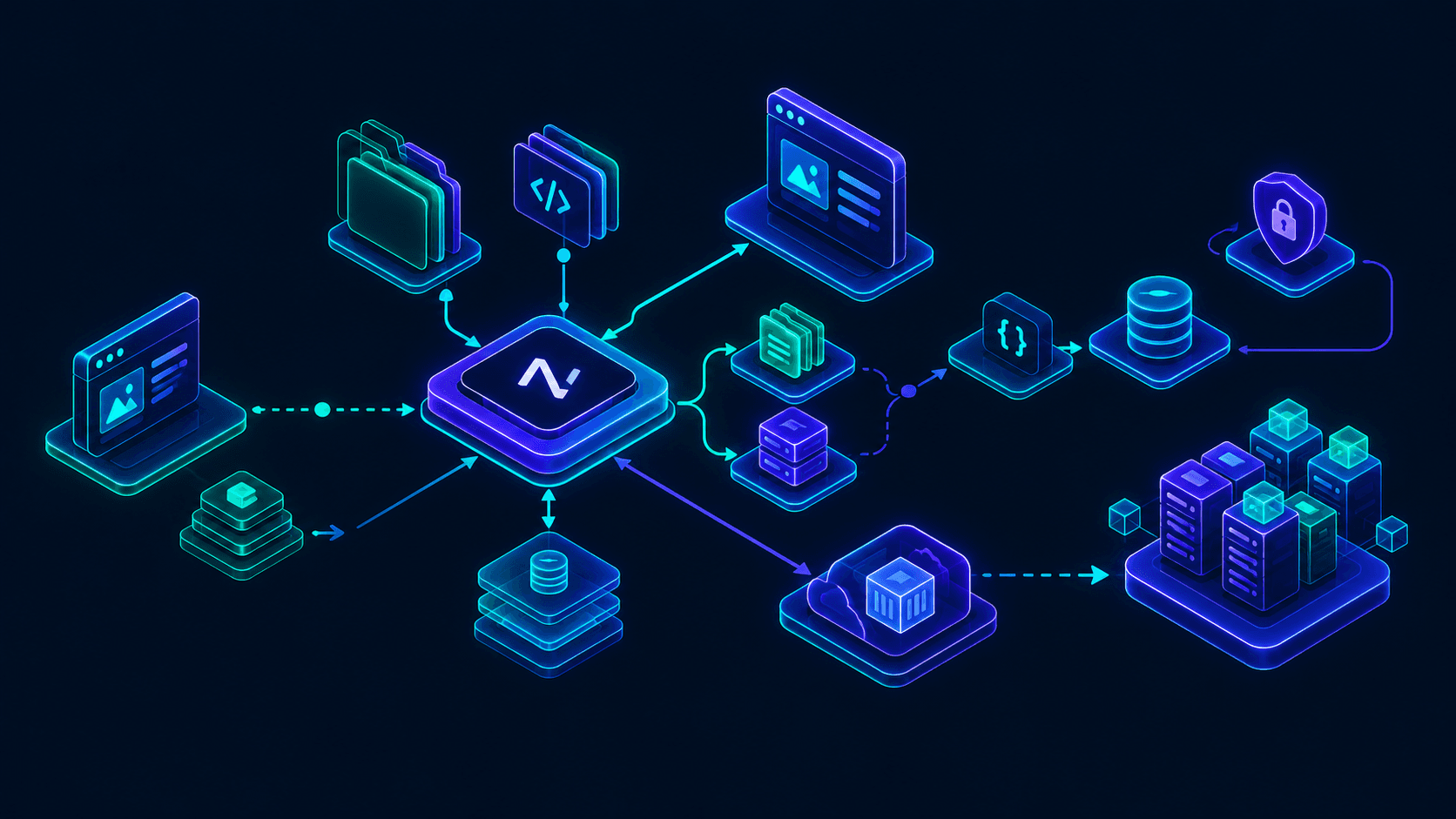
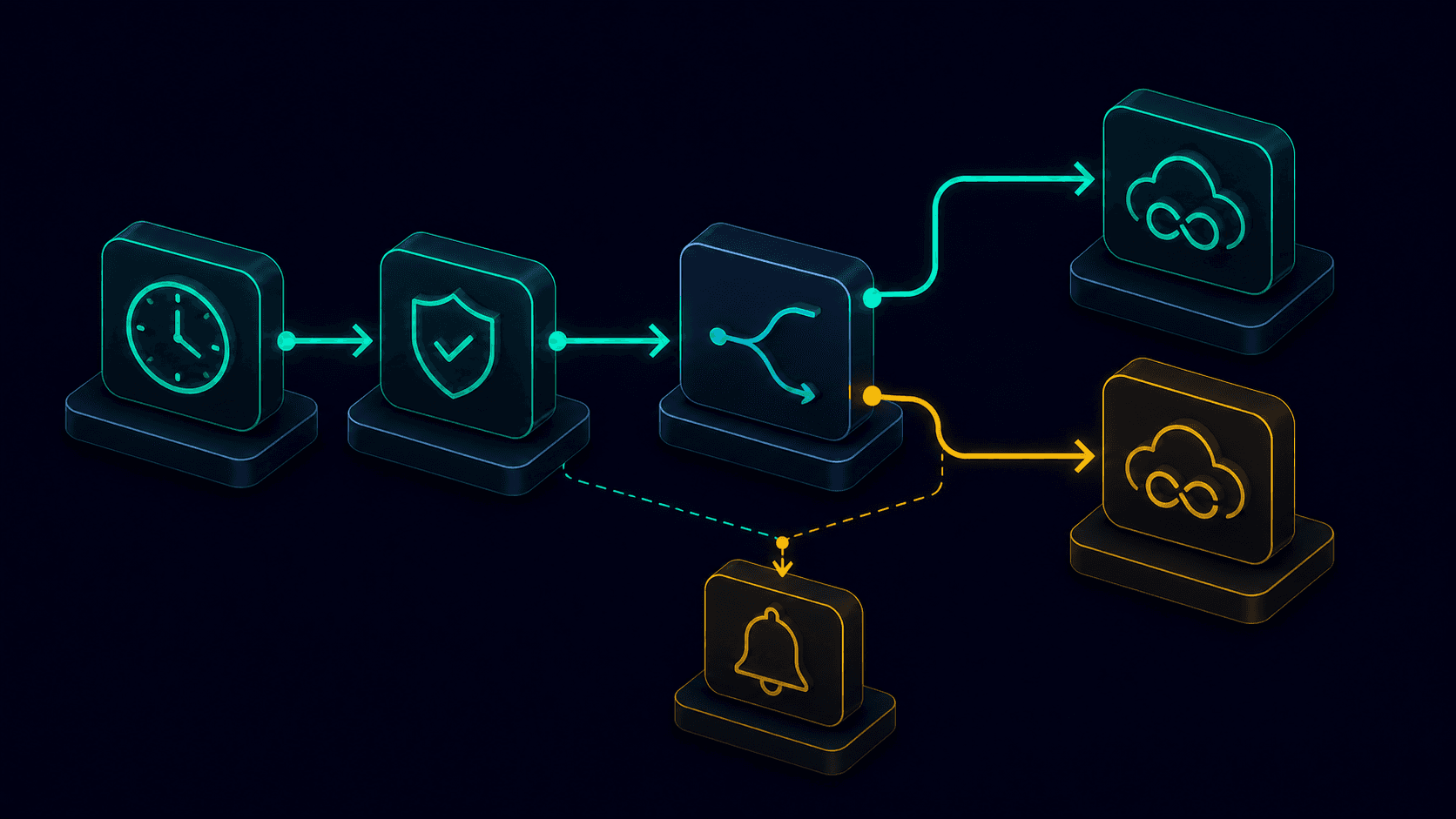 Figure 1: A scheduled status watcher feeds a cached health signal to the circuit breaker, which routes an agent-triggered deploy to GitHub Actions when healthy or to a self-hosted fallback runner - with a human paged either way - when degraded.
4. What Does an Undetected CI Outage Actually Cost a Team?
C = H × E × R
5. Which Resilience Pattern Should You Actually Adopt?
| Pattern | Detection Time | Setup Effort | Best For |
|---|---|---|---|
| No monitoring, manual noticing | Hours - whenever someone checks | None | Never, for anything with a real deploy cadence |
| Status watcher + human alert, no fallback runner | ~5 minutes | Low - one scheduled workflow | Small teams that can tolerate a manual deploy during an incident |
| Status watcher + automated fallback runner | ~5 minutes, self-healing | Medium-high - a maintained secondary CI path | Teams with SLA-bound release cadences or agent-driven deploys |
The circuit-breaker pattern here is the same principle behind the idempotent tool-call gateway I built for fintech AI agents: don't let an autonomous system retry blindly against a degraded dependency, gate it behind an explicit health check instead. It's also the same caching-and-rate-limit discipline from GPRG's architecture applied in the opposite direction - there it protected GitHub's rate limit from your traffic, here it protects your pipeline from GitHub's downtime.
6. Conclusion and Actionable Roadmap
GitHub's 2026 reliability record - 13 incidents in 17 days, sub-three-nines Actions uptime, and outages that specifically degrade Copilot's coding agent alongside the platform - isn't a reason to stop using AI coding agents in your pipeline. It's a reason to stop assuming they fail the way a blocked human does. Give your agent a status-aware circuit breaker, a fallback runner it can actually reach, and a human who gets paged within minutes instead of hours, and the same outage that cost another team a half-day of silent, unnoticed downtime costs yours the length of one status-poll cycle.
Building an AI-agent-driven deploy pipeline that needs to survive its dependencies going down? I architect resilient CI/CD and agent-orchestration systems - status-aware circuit breakers, fallback runners, and the observability to catch a silent failure in minutes, not hours - on Next.js, Node.js, and GitHub Actions. Contact me today to book a 30-minute pipeline resilience audit.